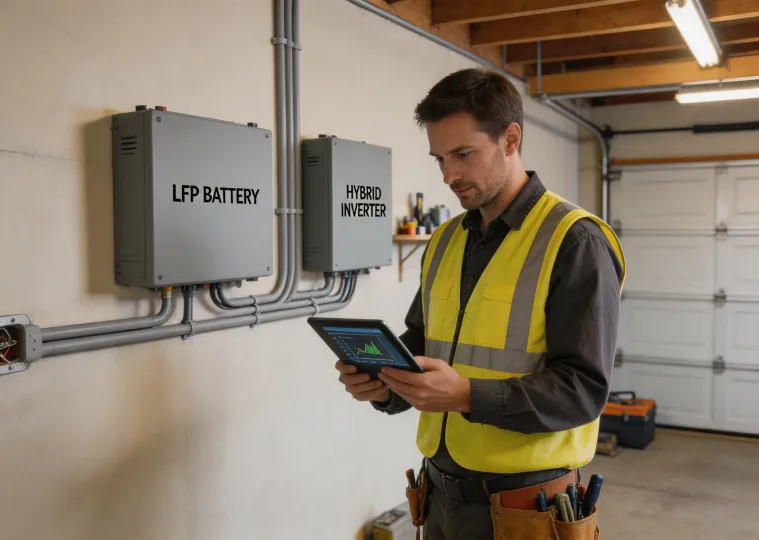
Engineer for commissioning
Documentation, settings and hardware choices are reviewed against what site crews actually touch during handover.
Deye's story is about the shift from standalone solar hardware to connected energy assets. The brand focuses on hybrid inverters, microinverters, energy storage, solar kits and monitoring services because modern renewable projects need more than conversion efficiency. They need observable behavior, battery coordination, load logic, installer clarity and long-term service continuity.
Deye approaches solar electronics with a system-first mindset. A residential installer may be working with a 5 kW hybrid inverter, a high-voltage battery, split backup circuits and a homeowner app. A commercial team may be balancing rooftop PV, demand charges, battery cycling and remote alarm workflows. Both projects rely on conversion hardware, but their success depends on how the equipment communicates with the site and with the people who maintain it.
This is why Deye content emphasizes MPPT voltage range, THD targets, battery protocol, round-trip efficiency, LFP safety characteristics, grid-code selection and monitoring visibility. These details give channel partners better conversations with owners, inspectors and service desks. They also reduce the temptation to promise impossible outcomes. Deye avoids claims such as guaranteed payback or unlimited lifetime warranties; instead, teams are encouraged to model project value from regional tariffs, incentives, load behavior and equipment lifecycle.
As the renewable market matures, more assets will be judged by controllability as much as by rated output. Deye's innovation-leader posture is built around that transition: hardware that is easier to integrate, software that is easier to read, and product roadmaps that prepare for V2H, V2G, grid-forming behavior and smarter fleet management.
Documentation, settings and hardware choices are reviewed against what site crews actually touch during handover.
CEC efficiency, round-trip storage losses and standby behavior matter more than isolated peak numbers.
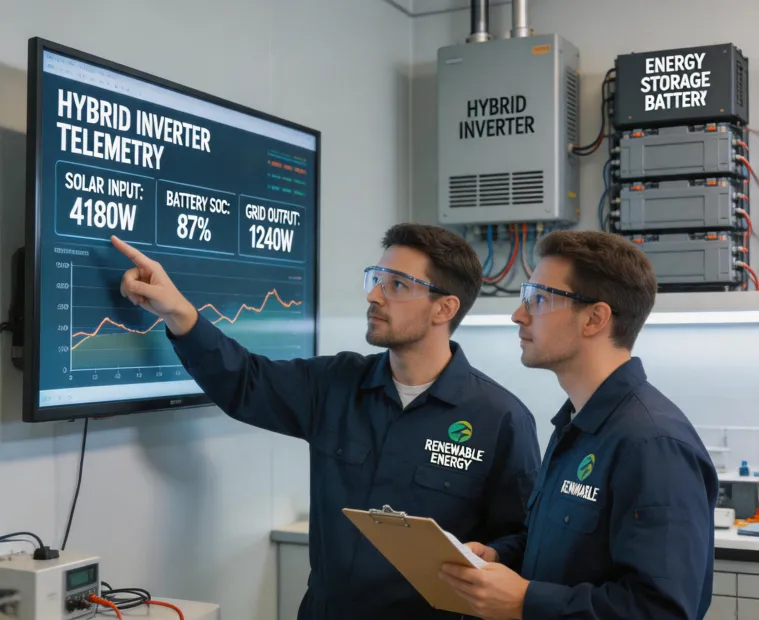
Monitoring dashboards translate production, SOC and alarms into understandable operating signals.
UL, IEEE, CE, VDE and AS requirements are discussed by market, not treated as interchangeable badges.
Deye's community impact is practical: projects that are easier to commission, clearer to monitor and simpler to maintain can stay productive with less avoidable waste. Better inverter sizing reduces replacement pressure. Better battery settings protect cycle life. Better monitoring shortens the path from alarm to action. These incremental improvements help installers defend their reputation and help owners treat solar plus storage as an asset instead of a mystery box on the wall.